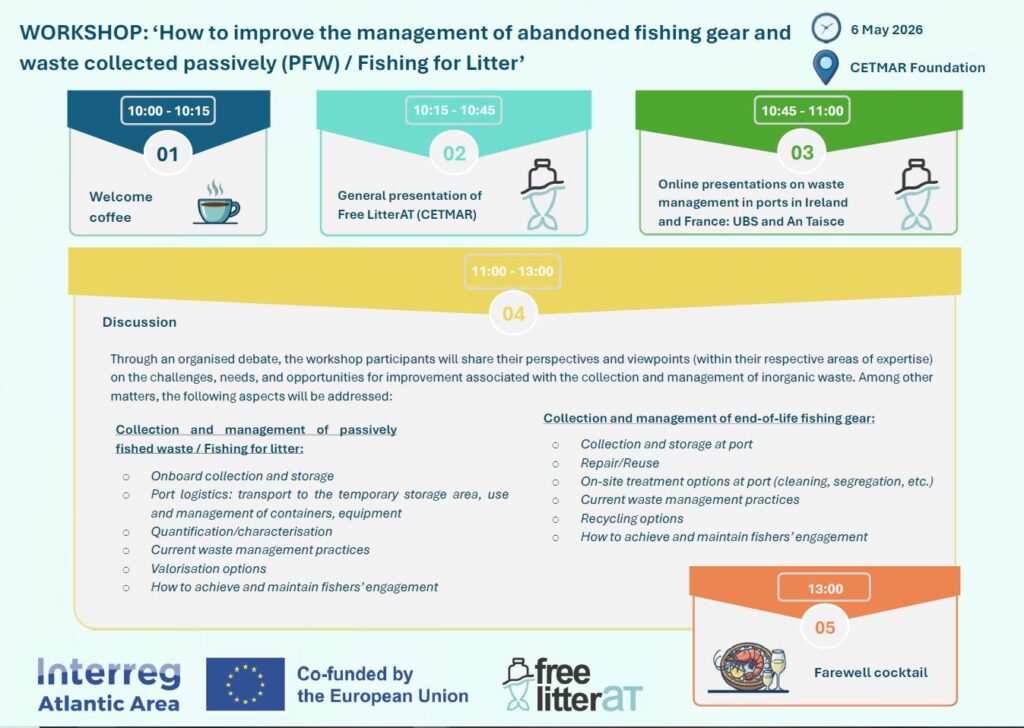
The CETMAR Foundation (Vigo) will host a workshop on 6 May 2026 at 10:00, as part of the Free LitterAT project. The event will address key challenges and opportunities for improving the management of abandoned fishing gear and passively fished waste (PFW), fostering dialogue among relevant stakeholders from different sectors.
The workshop will feature contributions from organisations involved in port waste management in Ireland and France, namely UBS and An Taisce. It will open with a general presentation of the Free LitterAT project, followed by thematic inputs and a structured, participatory discussion.
The event will bring together a diverse group of participants, including representatives from port authorities, waste management operators and recycling companies, net makers and repairers (“redeiras”), environmental NGOs, inclusive social entities, representatives of ongoing projects in the field, and members of the fishing fleet. This multi-sectoral composition aims to ensure a comprehensive exchange of knowledge, experiences, and perspectives.
The central part of the workshop will consist of an organised debate, where participants will discuss the main challenges, needs, and opportunities for improvement related to the collection and management of inorganic waste generated by fisheries activities.
The discussion will focus on two main thematic areas:
- Firstly, the management of passively fished waste (Fishing for Litter), addressing aspects such as onboard collection and storage practices, port logistics (including transport to temporary storage areas and the use and management of containers and equipment), waste quantification and characterisation, current management approaches, potential valorisation options, and strategies to ensure and maintain the engagement of fishers.
- Secondly, the management of end-of-life fishing gear, including collection and storage at port, possibilities for repair and reuse, on-site treatment options (such as cleaning and segregation), current waste management practices, recycling pathways, and measures to strengthen and sustain fishers’ participation.
The working language of the workshop will be Spanish.
Programme: