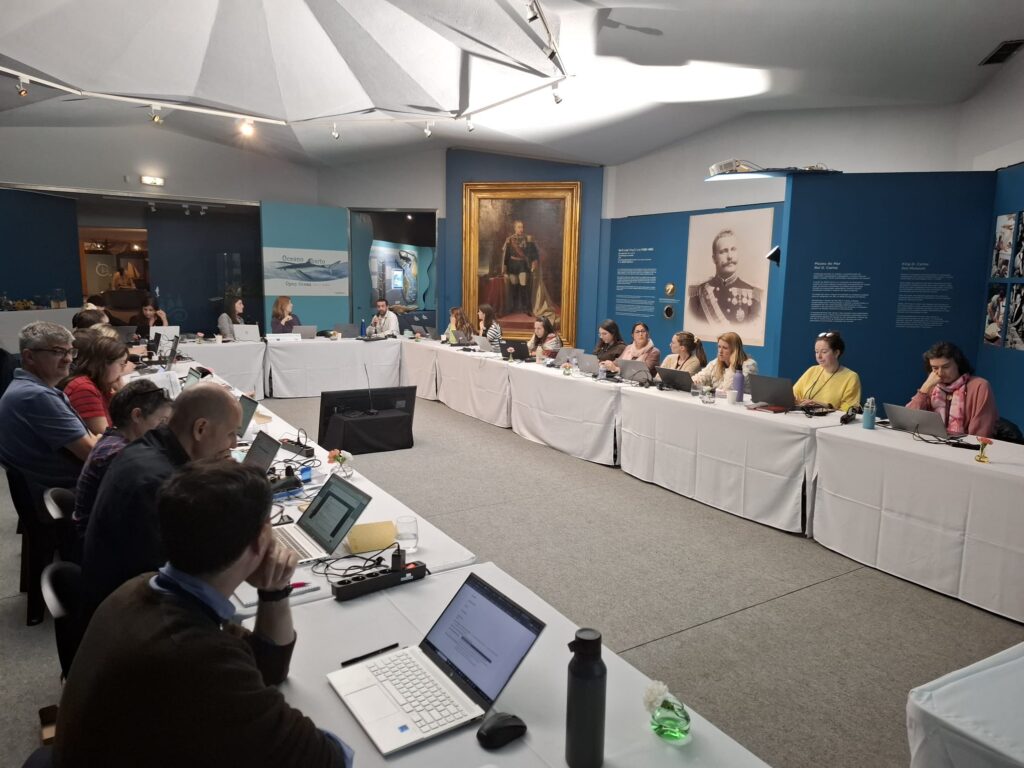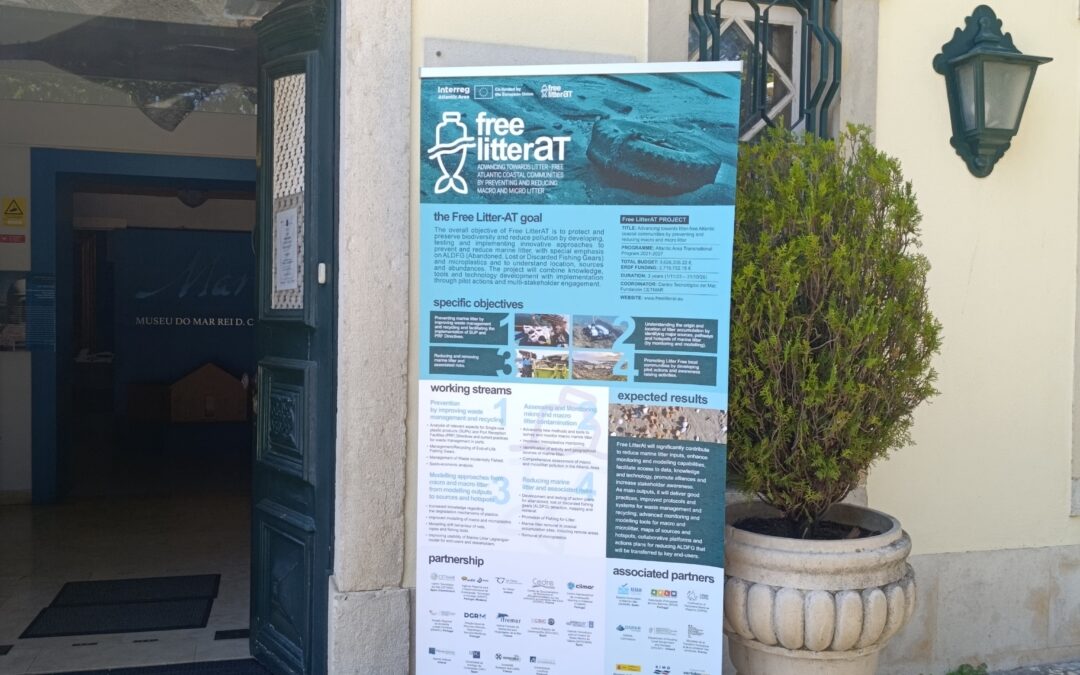
On 23-24 March 2026, the partners of the Free LitterAT project convened in Cascais, Portugal, for the VI SC meeting hosted by Lusofone University. At this advanced stage of the project, participants reviewed and consolidated ongoing results, shared outcomes, and coordinated the next steps to finalise deliverables and disseminate and transfer project results. Representatives from Spain, Portugal, France, and Ireland participated to align technical, operational, and regulatory activities across all work packages.
During the meeting, prevention activities were reviewed, including improvements in waste management and recycling practices in ports, as well as the management of End-of-Life Fishing Gear (EOLFG) and passively fished waste (PFW). Progress on the web of good practices was presented, featuring updated information on the current situation in ports across the four target countries and implemented recycling initiatives. Additionally, the flows of EOLFG in each country and the advanced status of guidelines and protocols for PFW management were assessed. The first of four planned local workshops was also presented, with the key objective of providing an overview of the current situation in each country and fostering the exchange of experiences among stakeholders. Results from two recent webinars complemented these activities, illustrating the implementation of the SUP, and PRF Directives and EPR schemes and capturing the perspectives of a diverse range of stakeholders, while the socio-economic study provided insights into public perception, community engagement, and the broader social impact of marine litter initiatives.
In monitoring, partners reported progress in seafloor monitoring using ROVs, AUVs, and DriftCam systems, complemented by extensive image analysis for litter annotation, demonstrating advances in automated and semi-automated approaches to characterise benthic macro-litter. Further improvements were noted in microplastic monitoring, including updated sampling techniques, harmonised analytical procedures, and improvements in data collection and processing, enhancing consistency and comparability at the transnational level. Initial results from the two workshops organised in Brest and Porto Santo and aimed at identifying geographical sources of marine litter were presented as well as preliminary assessments of pollution distribution across the Atlantic, highlighting hotspots and priority intervention areas to inform the planning of forthcoming pilot actions and the optimisation of operational monitoring and removal strategies.
The meeting also addressed modelling approaches, with partners presenting advances in the studies of plastic degradation, biofouling, resuspension and beaching processes. These results are being implemented in the Marine Litter Lagrangian model that has been upgraded and allows to explore connectivity between accumulation areas and land-based sources. A model that simulates drifting behaviour of nets and other fishing gear has already been finalized and was also presented together with the recent validation study carried out
Regarding marine litter reduction, partners shared current state of ongoing works to tackle ALDFG, Passively Fished Waste, litter accumulated in coastal areas and fibers and microplastics. Scheduled campaigns to test previously selected technological equipment for ALDFG detection were presented, as well as the initiation of pilot actions planned for this new project period. Pilots and progress in marine litter removal from coastal accumulation sites, including remote areas, were reported, as well as the state of the multilingual training courses and good practices in development. Moreover, advances and ongoing testing of microplastic filtration devices for washing machines as practical solutions to reduce microplastics at source were presented.
The meeting concluded with the presentation to partners of the status of communication, capitalisation, and coordination activities, reviewing project visibility on social media, updates to the project website, and partner participation in ongoing activities. In terms of capitalisation, interactions with relevant organisations were analysed, highlighting recent progress and exploring strategies to strengthen collaboration, ensuring that Free LitterAT continues to generate measurable impacts across the Atlantic region.
The VI SC meeting in Cascais reaffirmed the substantial progress achieved across all work packages. By consolidating scientific advances, operational testing, and stakeholder engagement, Free LitterAT strengthens its approach to reducing marine litter and promoting sustainable management practices throughout the Atlantic basin, with a clear plan for upcoming pilot actions, workshops, and capacity-building initiatives in 2026.